
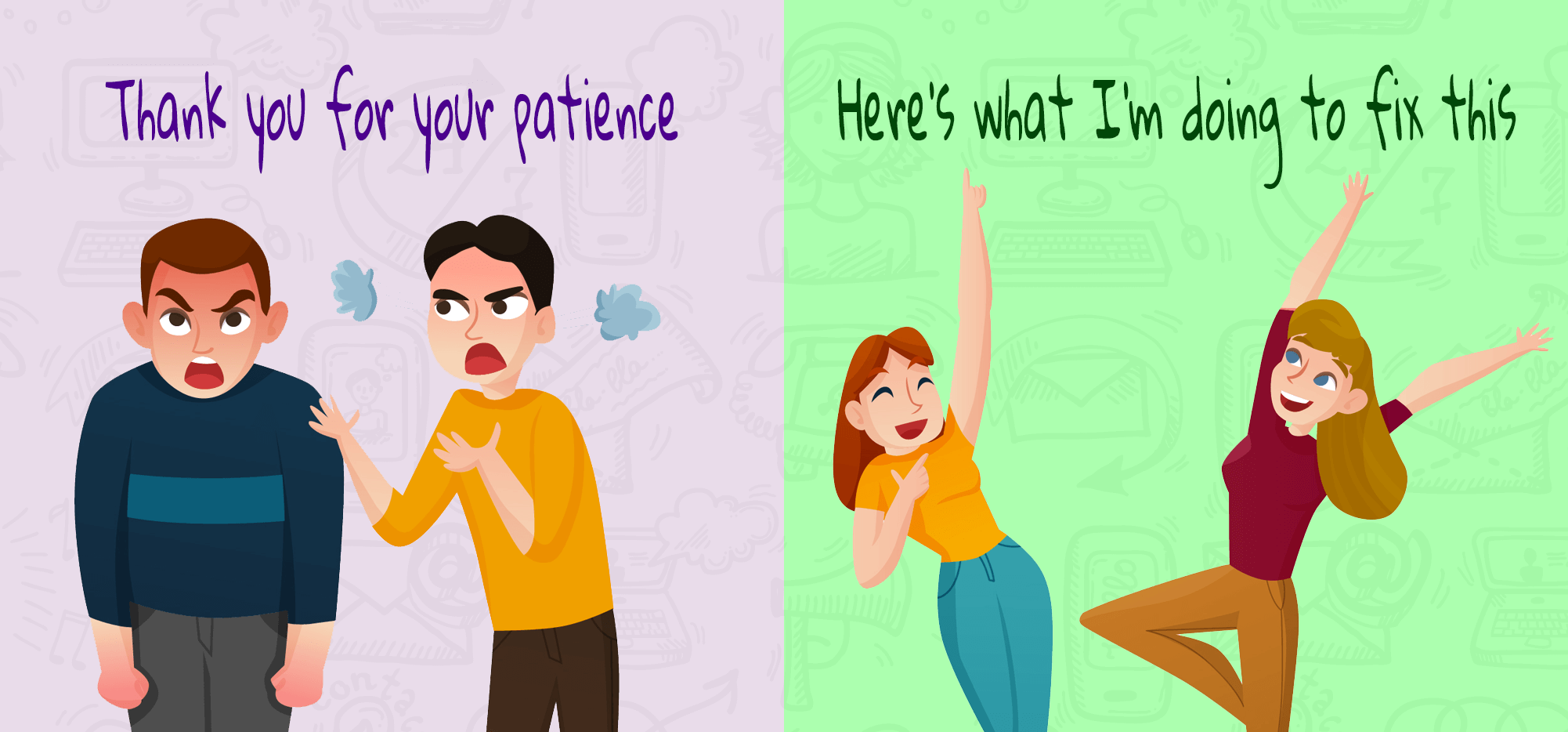
“Thank you for your patience.”
It’s one of those customer service phrases you default to when you want to sound polite, professional, and on top of things.
Until you’re the one on the receiving end of it.
Then you hate the sound of it and want the phrase to die a horrible, painful death.
Everyone does.
When a customer reaches out, they’re already frustrated. Maybe something isn’t working, or broke, or changed, or 100 other possibilities.
So dropping “thank you for your patience” after you’ve been working with the customer and haven’t yet solved the problem won’t help the situation — and it can even make things worse.
In this article, I’ll go into why “thank you for your patience” falls flat and share eight smarter, more effective phrases to use in your emails when things go wrong.
Thank You For Your Patience: Table of Contents
- 4 Reasons Why Your Customers Hate “Thank You For Your Patience”
- What to Avoid In Alternative Apology Phrases You Might Pick
- 8 Better Options Than “Thank You For Your Patience”
- 1. “I know how frustrating this is (having been on the other side of this many times).”
- 2. “Thank you for giving me the time to work through this for you.”
- 3. “I’m sorry we didn’t get this right, and I appreciate you sticking with me while I sort it out.”
- 4. “Here’s what I’m doing to fix this for you.”
- 5. “I’ve made this a priority and I’ll keep you updated as we move forward.”
- 6. “I know this isn’t ideal, and I’m committed to making it right.”
- 7. “I know this is taking longer than either of us expected, and I’m doing everything I can to get it resolved.”
- 8. “I want to make sure this gets resolved the right way for you.”
- Here’s the Best Way to Email Your Customers
4 Reasons Why Your Customers Hate “Thank You For Your Patience”
I came out pretty strong against “thank you for your patience” in the intro to this article — even going as far as to say it’s a net negative.
Why?
These are my four main reasons that phrase is a customer service death blow.
It puts the burden on the customer
“Thank you for your patience” shifts responsibility for the slowness in fixing a customer’s mistake from you to the customer.
It suggests they’re supposed to be patient — even though they’re the ones being inconvenienced.
It’s a subtle way of telling them you expect them to accept the situation and placate your difficulties instead of addressing theirs.
It recognizes inconvenience without being contrite
“Thank you for your patience” acknowledges there’s a problem and a delay — but doesn’t own up to it.
There’s no real apology in the phrase, just a vague attempt to smooth things over. That can make customers feel like you’re brushing off what they’re experiencing — or even gaslighting them.
It’s totally hollow
“Thank you for your patience” has been used so often, it’s lost any credibility.
It doesn’t feel personal or sincere. Instead, it sounds like something copied and pasted from a script — which makes customers feel like they’re not being treated as individuals.
It also gives them no confidence you’re actively working on their problem.
It focuses on the customer’s reaction to the issue, not resolving the issue
When you say, “Thank you for your patience,” you’re focusing on how the customer feels about the problem rather than addressing the problem itself.
It’s like saying, “Let’s focus on your patience, not the thing we messed up.” That’s frustrating when all the customer really wants is a solution.
What to Avoid In Alternative Apology Phrases You Might Pick
Before we dive into better ways to communicate about an unresolved customer issue, let’s talk about what to avoid.
Even the most well-intentioned responses can fall flat if they’re poorly phrased. Here are four common pitfalls and why they, like “thank you for your patience,” can hurt more than they help.
Admitting too much failure
Owning up to mistakes is important, but there’s a fine line between maturely taking responsibility and painting yourself or your company as a failure.
You don’t want to say “I know we dropped the ball” or “I’m so sorry we screwed this up” — or even “I’m really really sorry.”
You need to strike a balance between apologizing for a mistake without making the customer feel like you or your company is incompetent and/or will make a habit of messing things up.
Over-apologizing or framing the issue as a major misstep can make the customer question their decision to do business with you.
Instead, acknowledge the problem plainly, apologize proportionally — and focus on the solution.
Using passive voice
Passive language, like “Mistakes were made” or “This issue is being worked on,” dodges accountability and frustrates customers.
They want to know someone is actively handling their problem and passive voice shirks that responsibility.
Falling into clichés and corporate speak
Phrases like “We value your feedback” or “We’re sorry for any inconvenience caused” sound robotic and insincere.
Customers don’t want boilerplate cliches — they want authentic, empathetic communication.
You need to replace canned responses with conversational language that feels personalized and genuine.
(Even better than language that “feels” personalized and genuine? Language that is personalized and genuine.)
Glossing over the mistake as if it never happened
When customers feel unheard or dismissed, they check out. If you don’t acknowledge a problem at all, they may lose trust in you and take their business elsewhere.
Keep the focus on their experience and how you’re actively working to make it better.
8 Better Options Than “Thank You For Your Patience”
So are we all in agreement that your customers deserve more than a canned, overused phrase like “thank you for your patience”?
Great.
There are plenty of better ways to acknowledge an issue, show you care, and keep the conversation human.
Here are my hand-picked superior alternatives to “thank you for your patience” — and why they work.
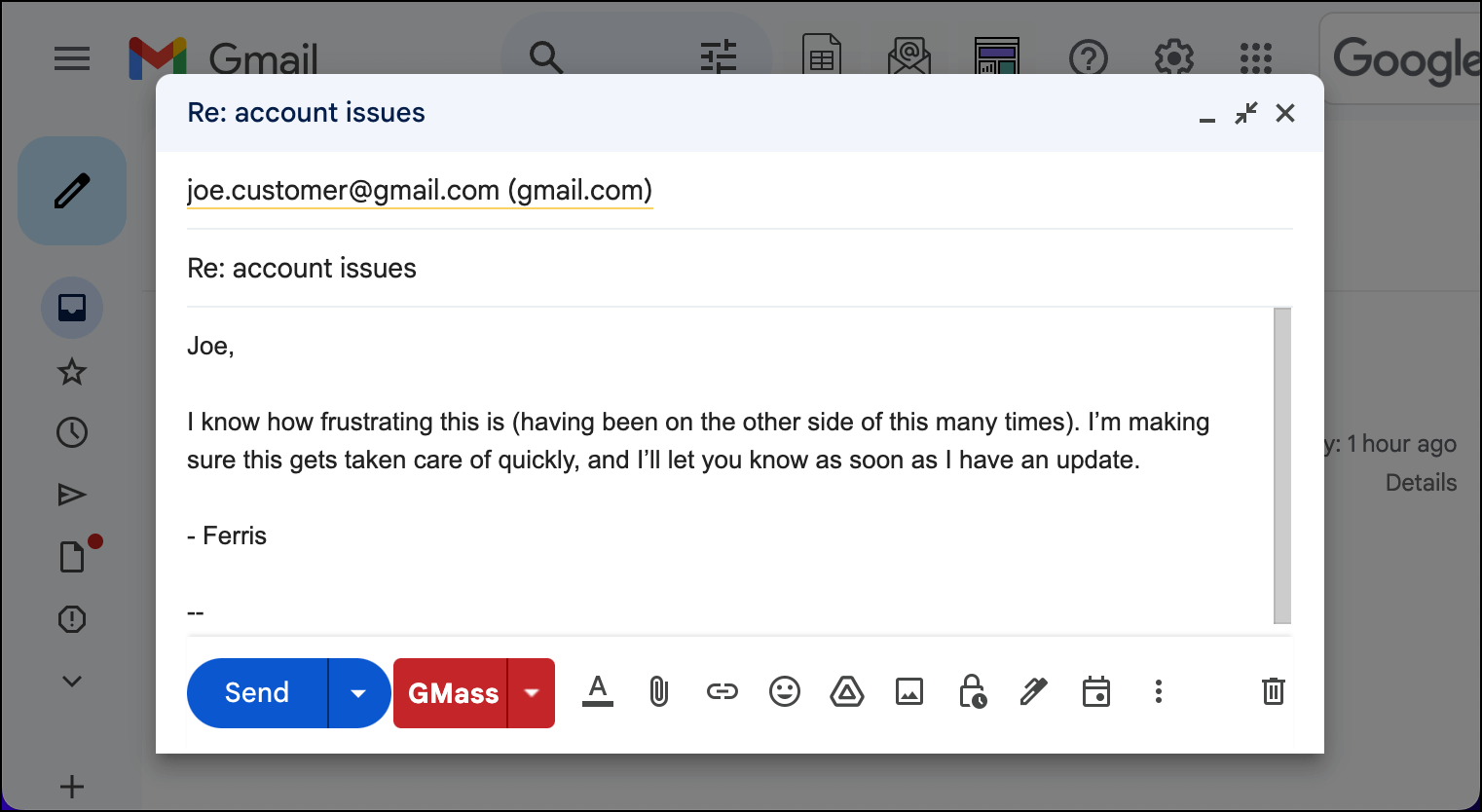
1. “I know how frustrating this is (having been on the other side of this many times).”
Tone: Relatable and empathetic.
Why it’s better: This phrase skips the corporate script and makes a real effort to connect.
By acknowledging your own experiences, you create a personal bond with the customer. It says, “I get it because I’ve been there,” which makes the interaction feel human and not transactional.
With this phrase, you’re not pretending to be perfect; you’re matching your customer’s energy and showing them you’re on their side.
Example usage: “I know how frustrating this is (having been on the other side of this many times). I’m making sure this gets taken care of quickly, and I’ll let you know as soon as I have an update.”
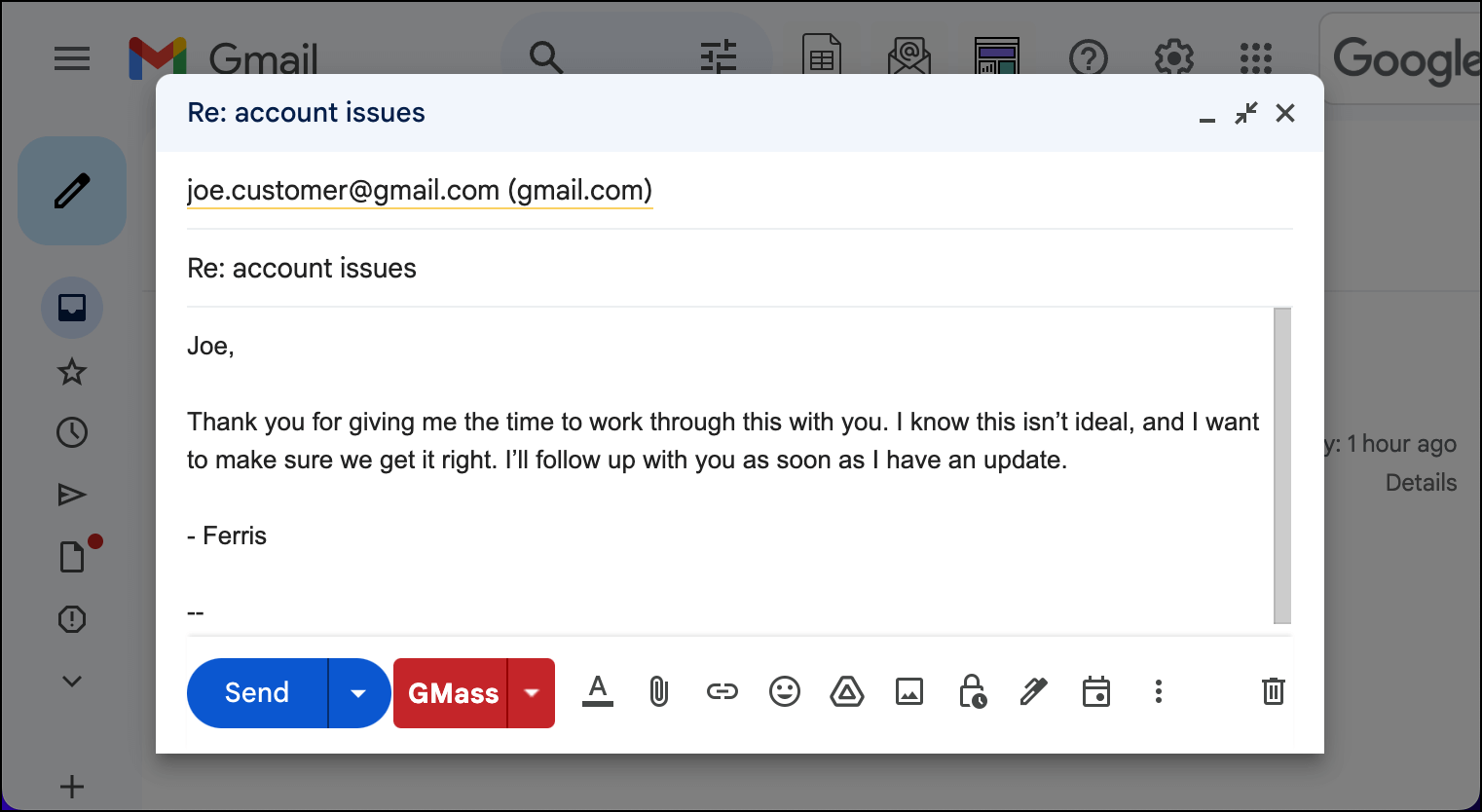
2. “Thank you for giving me the time to work through this for you.”
Tone: Grateful and contrite.
Why it’s better: “Thank you for your patience” assumes the customer is being understanding — and imposes that feeling on them.
“Thank you for giving me the time to work through this for you” is a contrast to that. This phrase shifts from assuming the customer is being understanding to genuinely appreciating the time they’re giving you.
It’s respectful and acknowledges that their time is valuable. Plus, framing it as a request rather than an assumption makes it feel honest and collaborative.
Example usage: “Thank you for giving me the time to work through this with you. I know this isn’t ideal, and I want to make sure we get it right. I’ll follow up with you as soon as I have an update.”
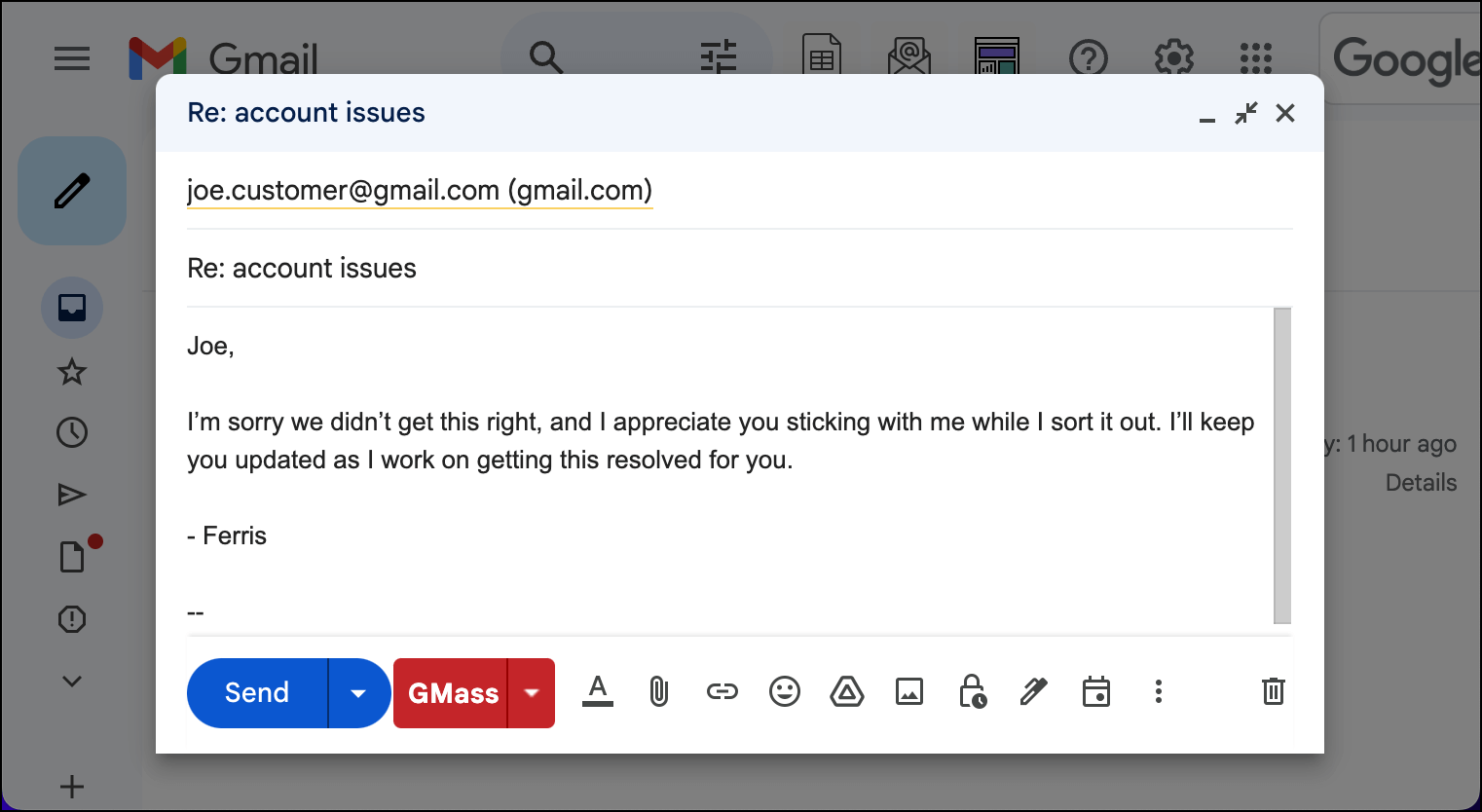
3. “I’m sorry we didn’t get this right, and I appreciate you sticking with me while I sort it out.”
Tone: Apologetic and appreciative.
Why it’s better: This phrase strikes a balance by acknowledging the mistake without exaggerating its severity. It pairs the apology with gratitude, showing the customer that you’re taking responsibility while valuing their patience.
Notice we’re not saying “I’m sorry this happened.” That’s using passive voice, which sends the message of shirking responsibility.
Also, I like this phrase because it subtly suggests that the customer not take their business elsewhere. We’re always trying to reduce the risk of a customer leaving because of a slow service interaction.
Example usage: “I’m sorry we didn’t get this right, and I appreciate you sticking with me while I sort it out. I’ll keep you updated as I work on getting this resolved for you.”
4. “Here’s what I’m doing to fix this for you.”
Tone: Proactive and solution-focused.
Why it’s better: This phrase skips past excuses and focuses on action.
It reassures the customer that you’re actively working on the problem, keeping the emphasis on resolving their issue quickly and effectively.
Notice it doesn’t have an apology. That’s ok — because a direct action plan without an apology is more desirable than no action plan with an apology.
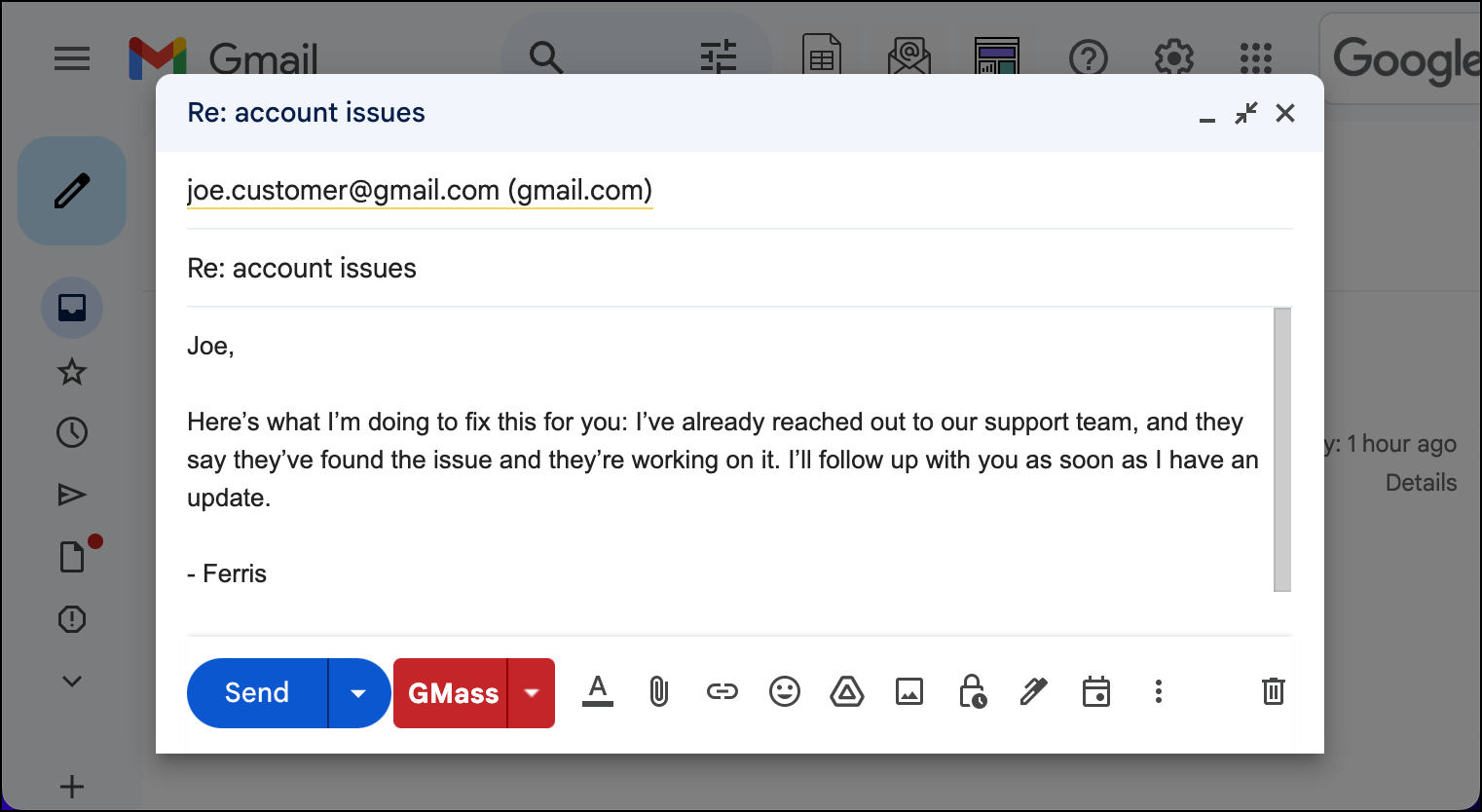
Example usage: “Here’s what I’m doing to fix this for you: I’ve already reached out to our support team, and they say they’ve found the issue and they’re working on it. I’ll follow up with you as soon as I have an update.”
5. “I’ve made this a priority and I’ll keep you updated as we move forward.”
Tone: Reassuring and transparent.
Why it’s better: This phrase reassures the customer that their issue is being taken seriously and communicates transparency by promising updates.
It avoids generic platitudes and focuses on keeping the customer informed.
Saying “I’ve made this a priority” is sneakily better than saying “We’re making this a priority.”
One, by going with “I’ve” and not “we’re,” it reassures the customer that you are personally doing something, this isn’t an issue that’s lost in the bureaucratic morass.
And two, by going with “made” instead of “making,” you show that you’re already in the process of taking decisive action — it’s not just something you’re starting now.
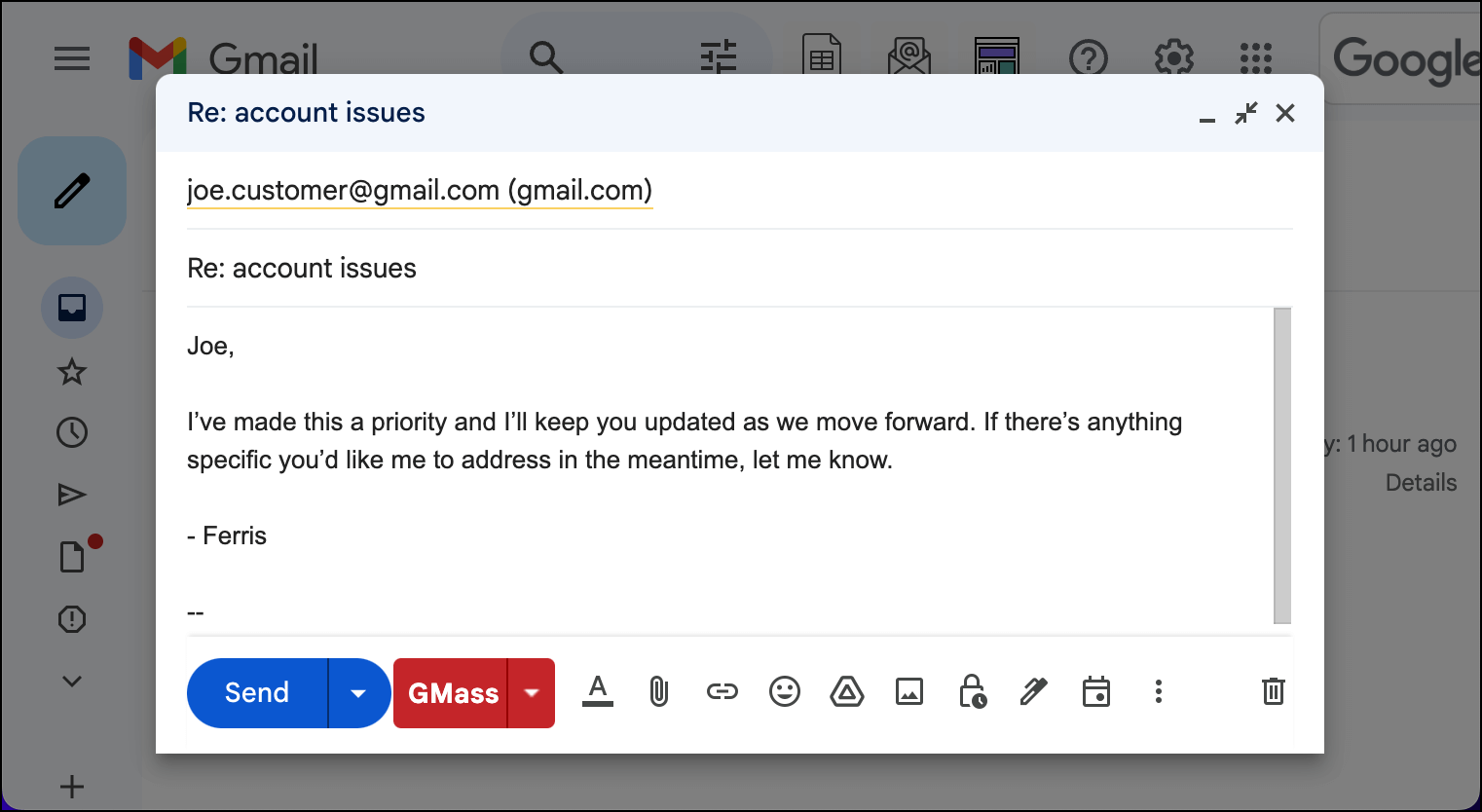
Example usage: “I’ve made this a priority and I’ll keep you updated as we move forward. If there’s anything specific you’d like me to address in the meantime, let me know.”
6. “I know this isn’t ideal, and I’m committed to making it right.”
Tone: Honest and reassuring.
Why it’s better: This phrase acknowledges the customer’s frustration without getting too exaggerated with remorse.
It shifts the focus to your commitment to solving the problem, offering both honesty and reassurance in a way that feels personal and proactive.
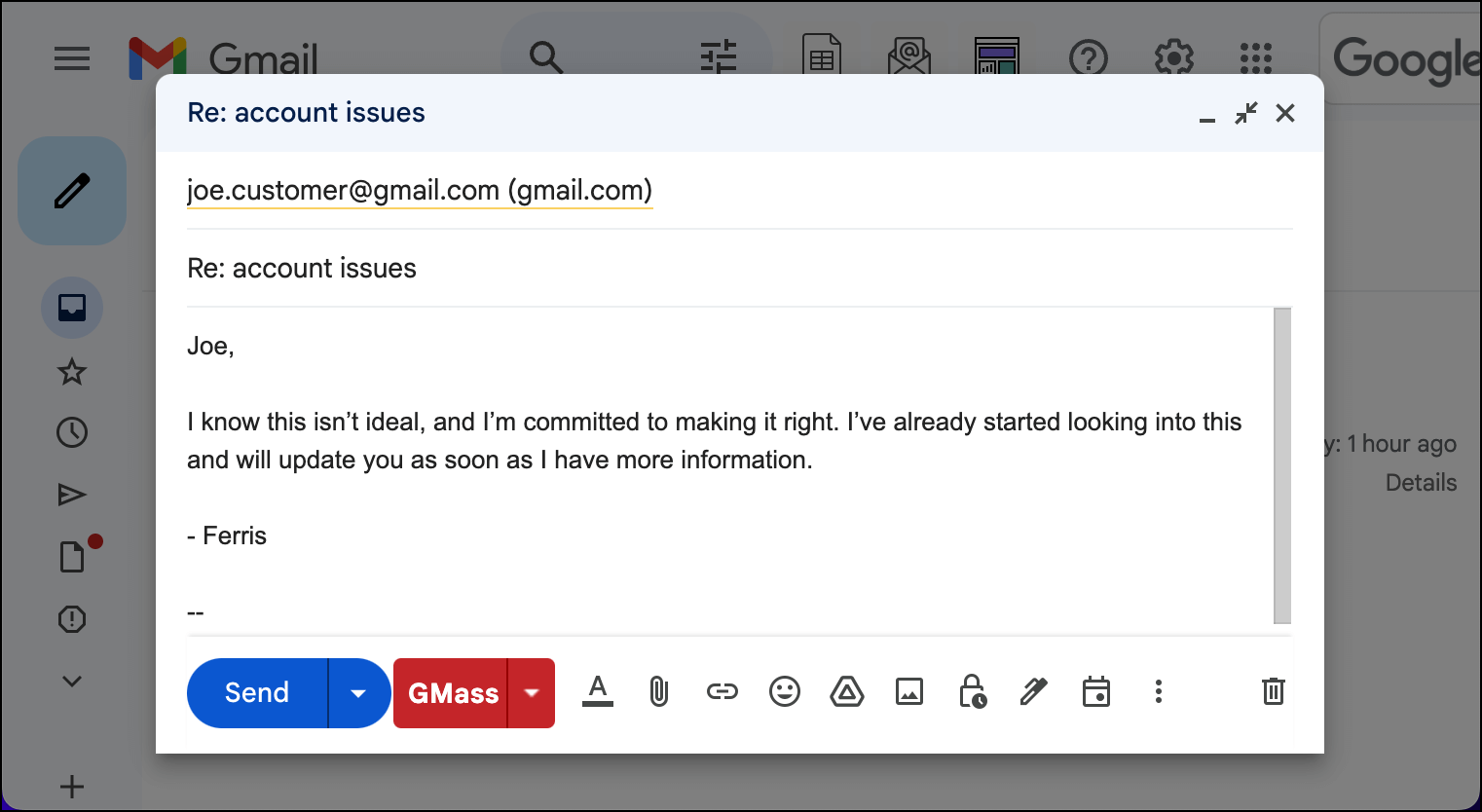
Example usage: “I know this isn’t ideal, and I’m committed to making it right. I’ve already started looking into this and will update you as soon as I have more information.”
7. “I know this is taking longer than either of us expected, and I’m doing everything I can to get it resolved.”
Tone: Collaborative and proactive.
Why it’s better: This phrasing acknowledges the delay in a way that feels mutual, showing you’re on the customer’s side.
It avoids putting the burden on them while emphasizing your active effort to fix the problem.
Yes, perhaps it seems a tiny bit like you’re throwing someone else on your team under the bus — but that just helps build your rapport with the customer even more.
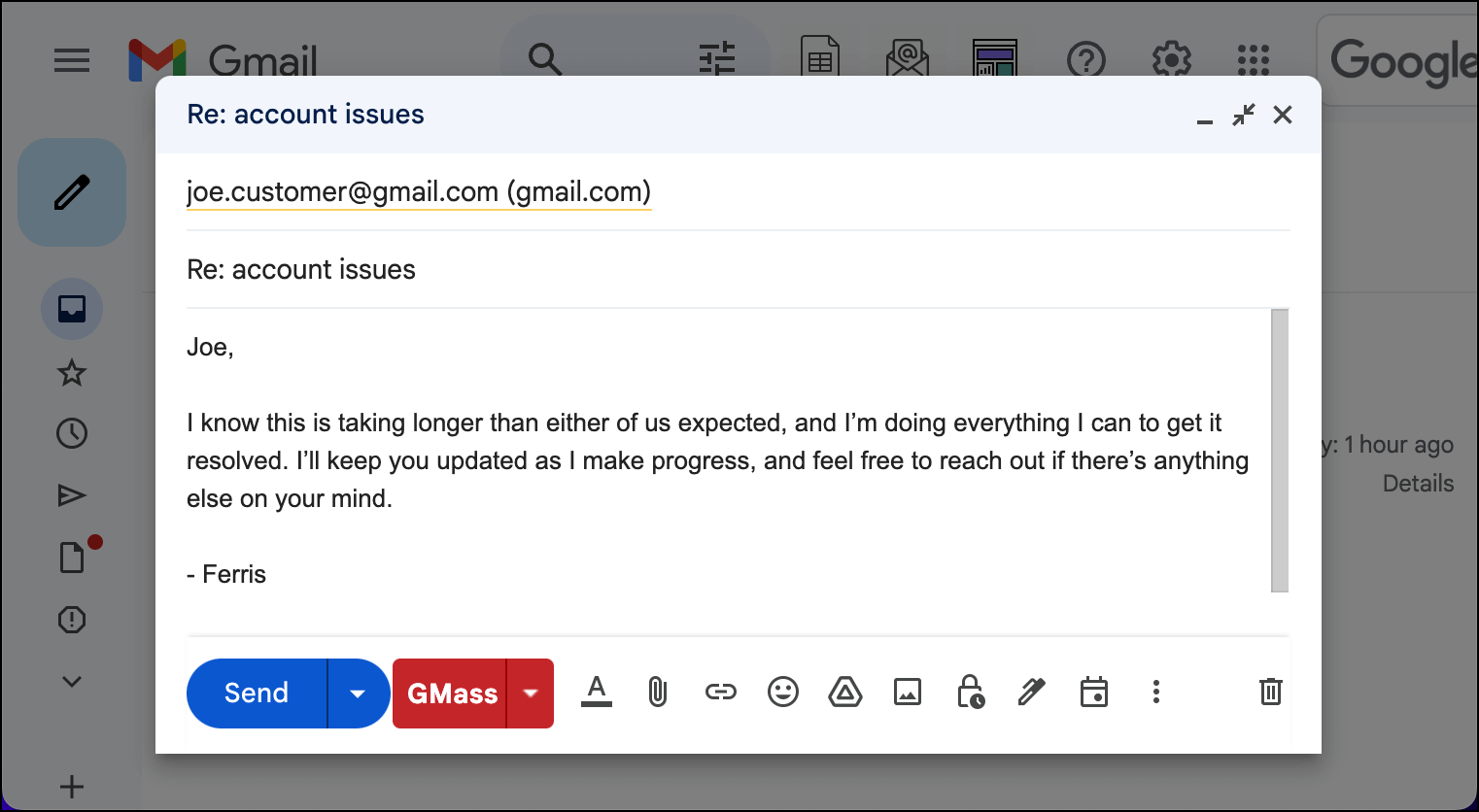
Example usage: “I know this is taking longer than either of us expected, and I’m doing everything I can to get it resolved. I’ll keep you updated as I make progress, and feel free to reach out if there’s anything else on your mind.”
8. “I want to make sure this gets resolved the right way for you.”
Tone: Reassuring and customer-focused.
Why it’s better: This is a good way to give an excuse for the delay. See: You’re not trying to just get their problem solved quickly, you’re trying to get it solved right.
That’s why it’s taking so long. Yeah… that’s the reason.
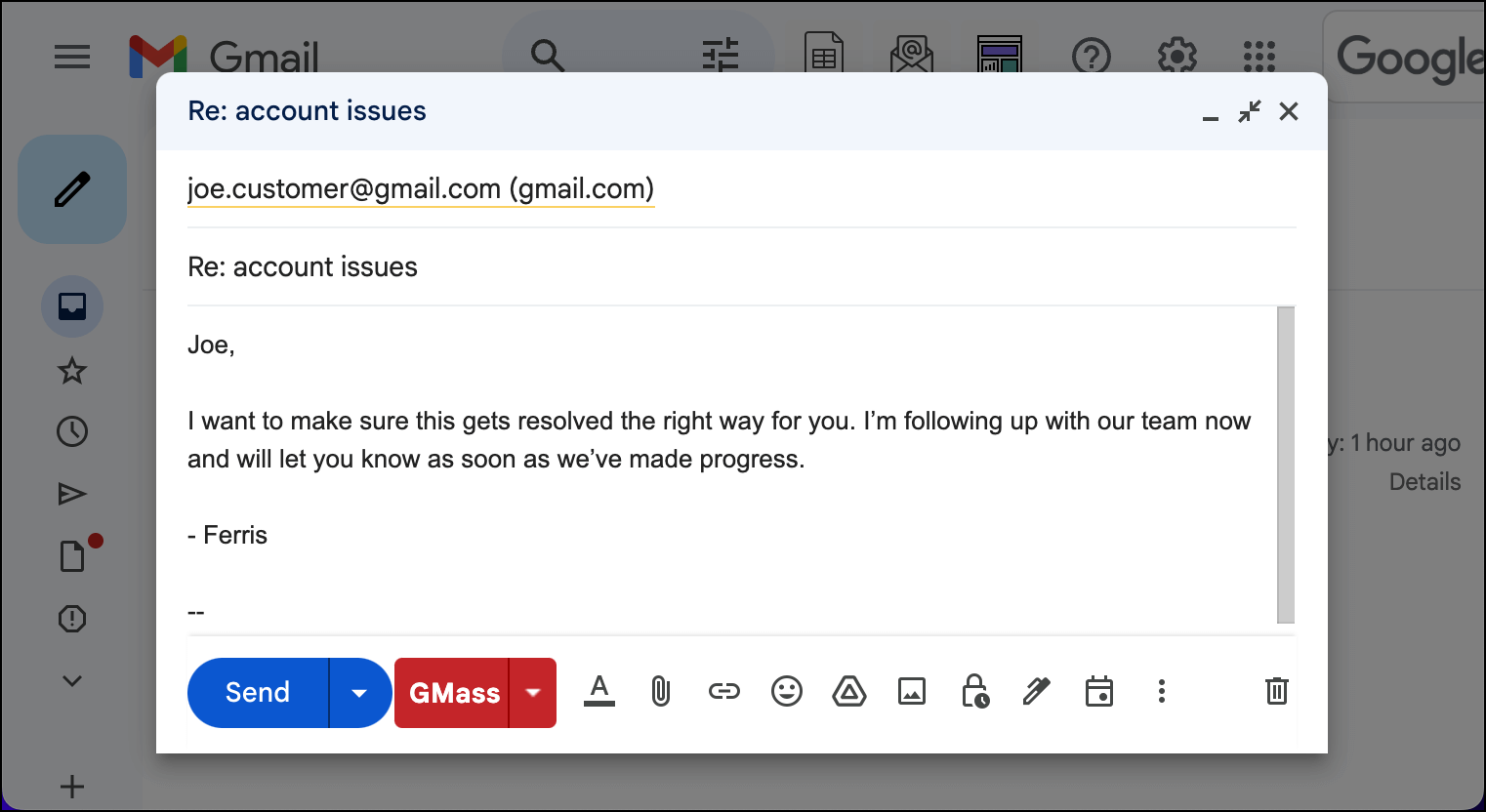
Example usage: “I want to make sure this gets resolved the right way for you. I’m following up with our team now and will let you know as soon as we’ve made progress.”
Here’s the Best Way to Email Your Customers
Regardless of which better alternative you pick to “thank you for your patience” — make sure you’re sending your messages to customers with the best possible email platform.
So… please allow me to introduce you to GMass.
If you’re not familiar, GMass is a complete email sending platform that works inside of your Gmail or Google Workspace account.
GMass is a Chrome extension that quite literally transforms Gmail into an outreach, email marketing, and mail merge platform.
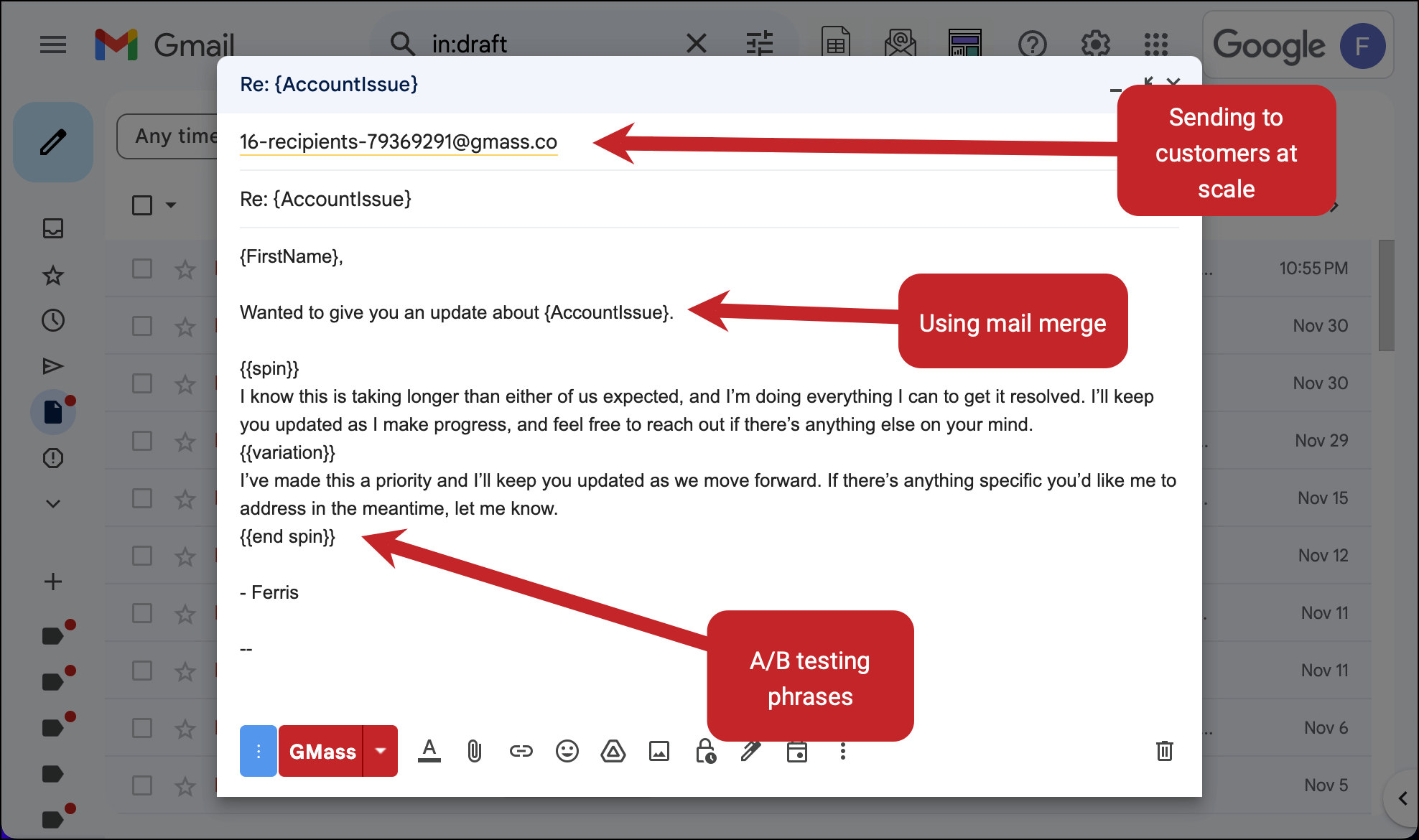
So when you’re reaching out to customers, you can use GMass’s Google Sheets mail merge features for an extra dose of personalization.
(Imagine how good your customer service emails will be when you can mail merge in details about their case?)
And then, track things like opens and responses… add simple email polls… add in plain-text auto follow-ups… and/or even A/B test your rephrased version of “thank you for your patience.”
Almost 400,000 users, from salespeople to nonprofits to, yes, customer service teams, use GMass to send their emails — and have given GMass an average rating of 4.8 out of 5 stars across 10,000+ reviews.
It’s totally free to try — with no credit card required. Just download the Chrome extension and you’ll be up and running in minutes.
That’s right… you’ll be up and running so fast I’ll never have to thank you for your patience.
Not that I would ever phrase it like that anyway.
Send incredible emails & automations and avoid the spam folder — all in one powerful but easy-to-learn tool
TRY GMASS FOR FREE
Download Chrome extension - 30 second install!
No credit card required